
14 Dec 2025
How to Smoke-Fire Pottery with Copper Sulfate, Onion Skins, and Sawdust
Smoke firing in pottery (or pit firing) is one of the most fascinating techniques there is. Every piece comes out different, with metallic reflections, unpredictable tones, and textures that seem alive.
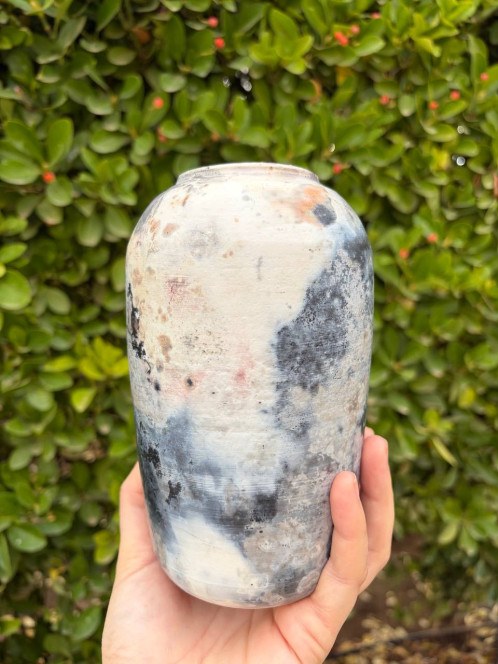
In this post I'll walk you through, step by step, how I do a smoke firing with copper sulfate, onion skins, and sawdust on a surface finished in burnished terra sigillata.
Why use terra sigillata for smoke firing?
Terra sigillata creates a smooth, slightly sealed surface that enhances the contrasts of the smoke and the metallic oxides. By burnishing it before the bisque firing, we achieve a satiny finish that, after smoke firing, takes on an almost metallic sheen.
The result: a unique piece, full of nuance and reflections.
Materials for smoke firing in pottery
For this process I used four main components, each with a specific role:
- Copper sulfate → produces coppers, turquoises, blues, and metallic reds.
- Onion skins → bring browns, golds, and reddish tones.
- Salt → intensifies the shine and the contrasts.
- Sawdust → produces the black or smoky-gray background that ties the piece together.
This combination gives you a very rich, organic range of colors, perfect for bringing out the forms and the burnishing of the terra sigillata.
Step by step: how to do a smoke firing with copper sulfate
- Prepare the fire. Build a layer of live embers in the bonfire or firing pit.
- Place the piece. **Coat the piece with the copper sulfate solution (mixed with water and a pinch of salt). Let it dry completely before continuing.Wrap the ceramic in the materials (copper, onion, salt, sawdust) using aluminum foil to hold everything together. Don't press too hard, but make sure the material doesn't all pile up in one spot as you handle it. Set it on the embers.
- Cover it partially with more embers.** Don't bury it completely; let it breathe.
- Keep the fire moderate for 45 min – 1 h 30 min. The key is a slow, steady burn.
- Let it cool completely. This can take between 2 and 3 hours. Don't worry if the aluminum foil has fallen apart when you dig it out: that's normal.
- Cleaning and finishing. Once cool, gently rub it with a cloth to bring out the shine. If you like, apply a very thin layer of beeswax or furniture wax to protect the surface.
Final result
The result is a ceramic with a metallic effect, shifting tones, and a texture that seems to tell its own story. No two pieces are ever alike — and that's the true magic of pit firing.
If you haven't tried this technique yet, I encourage you to give it a go! All you need is patience, fire, and the desire to experiment with the alchemy of clay. ✨
Related videos
Videos embedded from Instagram (Meta), which may set its own cookies. They load when you reach this section.
3790
Comments(0)
No comments yet. Be the first to write one!